What percentage of humans have Neanderthal DNA?

Isabella Harris
Updated on January 11, 2026
Neanderthals have contributed approximately 1-4% of the genomes of non-African modern humans, although a modern human who lived about 40,000 years ago has been found to have between 6-9% Neanderthal DNA (Fu et al 2015).
What ethnic group has the most Neanderthal DNA?
East Asians seem to have the most Neanderthal DNA in their genomes, followed by those of European ancestry. Africans, long thought to have no Neanderthal DNA, were recently found to have genes from the hominins comprising around 0.3 percent of their genome.What is a high percentage of Neanderthal DNA?
The percentage of Denisovan DNA is highest in the Melanesian population (4 to 6 percent), lower in other Southeast Asian and Pacific Islander populations, and very low or undetectable elsewhere in the world.Which human race is closest to Neanderthal?
Together with an Asian people known as Denisovans, Neanderthals are our closest ancient human relatives. Scientific evidence suggests our two species shared a common ancestor. Current evidence from both fossils and DNA suggests that Neanderthal and modern human lineages separated at least 500,000 years ago.Is it good to have Neanderthal DNA?
Some people may have genes inherited from Neanderthals that reduce their risk of severe COVID-19 by 22%, a study found. But the same researchers previously found that Neanderthal DNA can also put people at higher risk of respiratory failure due to COVID-19. The inherited genes are more common in Europe and Asia.Neanderthal DNA has subtle but significant impact on human traits
What blood type were Neanderthals?
This means Neanderthal blood not only came in the form of blood type O – which was the only confirmed kind before this, based on a prior analysis of one individual – but also blood types A and B.Do redheads have more Neanderthal DNA?
Bones from two Neanderthals yielded valuable genetic information that adds red hair, light skin and perhaps some freckling to our extinct relatives. The results, detailed online today by the journal Science, suggest that at least 1 percent of Neanderthals were redheads.Did Neanderthals have blue eyes?
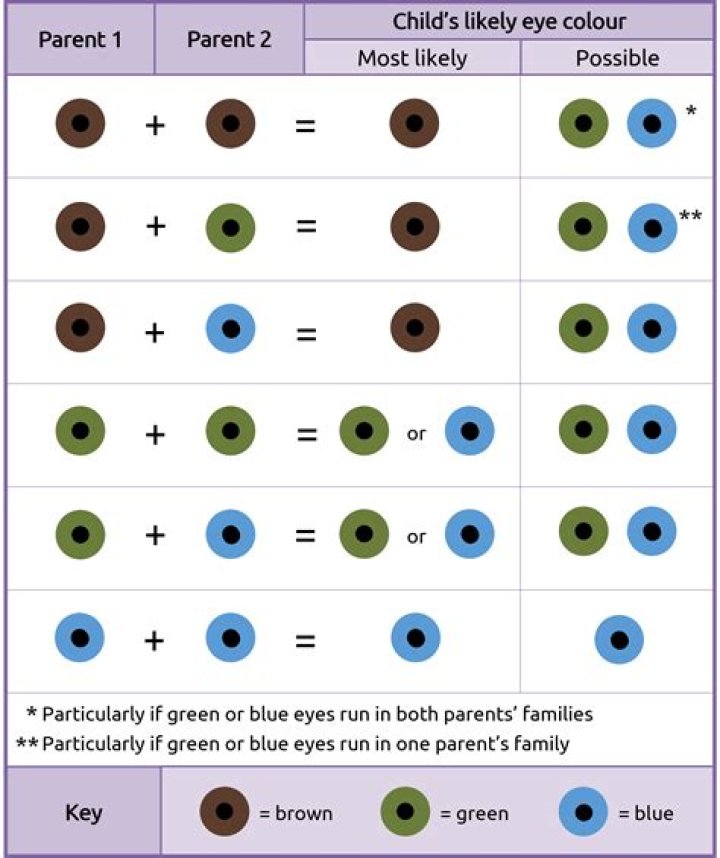
Fair skin, hair and eyes : Neanderthals are believed to have had blue or green eyes, as well as fair skin and light hair. Having spent 300,000 years in northern latitudes, five times longer than Homo sapiens, it is only natural that Neanderthals should have developed these adaptive traits first.Do Native Americans have Neanderthal DNA?
The fascinating part of this, aside from the fact that Native people also carry both Denisovan and Neanderthal DNA, and that they carry more than Europeans, is that the Denisovan and Neanderthal DNA that they carry is different than that carried by Europeans.Does Neanderthal DNA affect intelligence?
The Neanderthal DNA variants alter gene expression in brain regions involved in planning, coordination and learning of movements. These faculties are used in speech and language, but there is no indication that the Neanderthal DNA affects cognition in modern humans.Are Neanderthals smarter?
“They were believed to be scavengers who made primitive tools and were incapable of language or symbolic thought.”Now, he says, researchers believe that Neanderthals “were highly intelligent, able to adapt to a wide variety of ecologicalzones, and capable of developing highly functional tools to help them do so.What is the oldest human DNA found?
In a technical feat, researchers sequenced the oldest human DNA yet, retrieving an almost complete mitochondrial genome from a 300,000- to 400,000-year-old sliver of human bone found in Spain's Atapuerca Mountains. To their surprise, this proto-Neandertal yielded ancestral Denisovan DNA.Does blonde hair come from Neanderthals?
It is quite likely that the Neanderthals had as many hair colours as modern Europeans – from blond through to dark, perhaps depending on exactly where in Europe they lived, and also based on the combination of the variants they could have had in the MCR1. However, this is not just about hair colour.What are Neanderthal traits?
Overall, we found that Neanderthal ancestry contributes less-than-expected to the genetics of most traits in modern Europeans. However, Neanderthal variants contribute more-than-expected to several traits, including immunity, circadian rhythms, bone density, menopause age, lung capacity, and skin color.What is the rarest eye color?
Of those four, green is the rarest. It shows up in about 9% of Americans but only 2% of the world's population. Hazel/amber is the next rarest of these. Blue is the second most common and brown tops the list with 45% of the U.S. population and possibly almost 80% worldwide.How do you tell if you're a Neanderthal?
The only way to know if you carry Neanderthal genes would be to have genetic testing carried out.How tall were Neanderthals compared to humans?
Evidence from skeletons shows that Neanderthals were smaller than modern humans, usually between 150 – 160 centimetres tall, but some of the Le Rozel footprints seem to have been made by someone with a height of 175 centimetres. This is the average height of a man in the USA today.What skin color did Neanderthals have?
Neanderthals had a mutation in this receptor gene which changed an amino acid, making the resulting protein less efficient and likely creating a phenotype of red hair and pale skin. (The reconstruction below of a male Neanderthal by John Gurche features pale skin, but not red hair) .Where did red hair originally come from?
Contrary to what many people assume, redheads did not originate in Scandinavia, Scotland or Ireland, but in central Asia. Their coloring is due to a mutation in the MC1R gene that fails to produce sun-protective, skin-darkening eumelanin and instead causes pale skin, freckles and red hair.What did we inherit from Neanderthals?
Persistent genesThe scientists showed that in modern humans, the 152 genes we inherited from Neanderthals interact with modern day HIV, influenza A and hepatitis C – all types of RNA virus.